
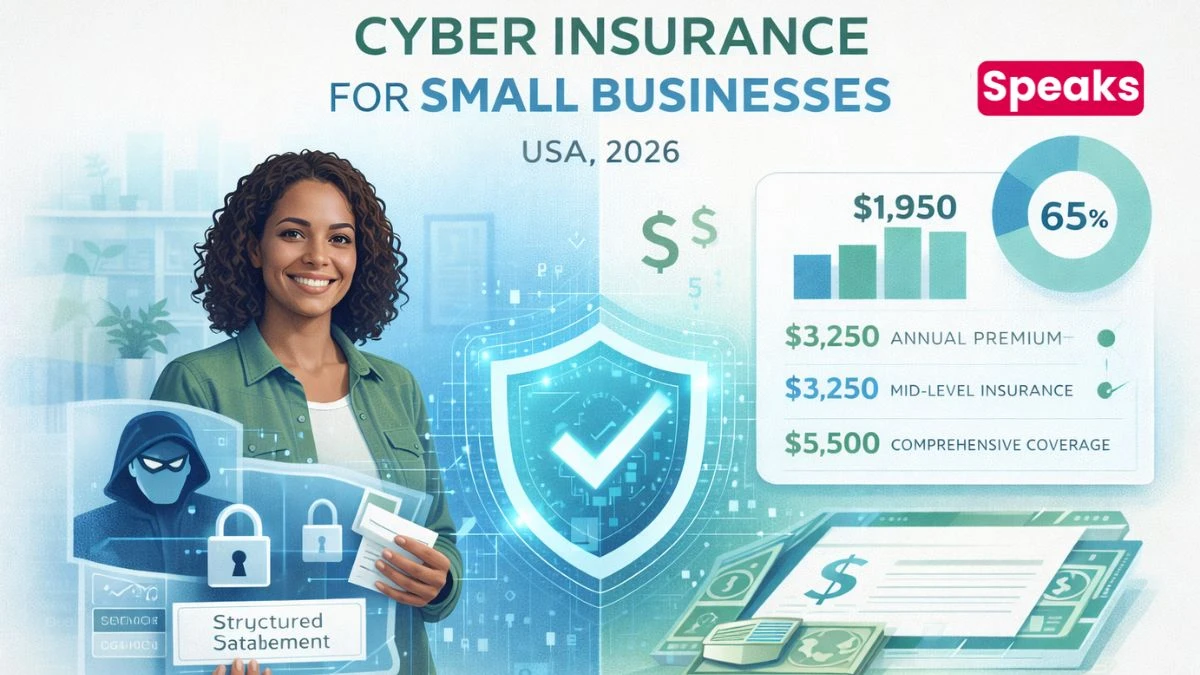
Cyber Insurance Cost for Small Business: Hey, small business owners across the USA—whether you’re hustling in New York, building in California, or running things in Texas or Florida. Cyber threats are everywhere in 2026, and small businesses are getting hit hard. Understanding the cyber insurance cost for small business has become essential if you want to protect your livelihood without draining your cash flow.
Cyber insurance (sometimes called cyber liability insurance) helps cover the financial damage from data breaches, ransomware attacks, phishing scams, and other digital disasters. For small businesses, it’s often more affordable than people think—averages typically range from $83 to $145 per month depending on your setup. This USA ke liye article breaks down everything you need to know: current costs, what influences pricing, why it’s worth it, how to choose the right policy, and more. Let’s get into it.
What Is Cyber Insurance and Why Do Small Businesses Need It in the USA?
Cyber insurance isn’t just for giant corporations anymore. Small businesses are actually the favorite targets of cybercriminals because many don’t have strong defenses. Recent U.S. government reports show that more than half of all cyberattacks target companies with fewer than 50 employees.
The policy typically pays for:
- Data recovery and system restoration
- Legal defense costs if customers sue
- Customer notification expenses after a breach
- Business interruption losses (lost income while you’re offline)
- Ransomware payments in some cases
- Public relations help to manage reputation damage
In the United States, strict state-level privacy laws (especially California’s CCPA and similar rules in other states) mean a single breach can lead to massive fines and lawsuits. Skipping cyber coverage could turn a bad situation into a business-ending one. The average cost of a data breach for small businesses often exceeds $70,000–$100,000, making insurance a smart financial move.
Plus, having cyber insurance builds trust with customers and partners—especially in competitive American markets.
Factors That Drive Cyber Insurance Cost for Small Business
Your cyber insurance cost for small business isn’t random—insurers evaluate several specific risk factors to set your premium.
- Business size and revenue — Solo operations or very small teams usually pay the least, while growing companies with more employees and higher revenue see higher rates.
- Industry — Healthcare, finance, and legal businesses handling sensitive personal data pay more due to heavy regulations. Retail and general services often fall in the middle.
- Cybersecurity practices — Strong measures like multi-factor authentication (MFA), regular employee training, up-to-date firewalls, and encrypted backups can lower premiums significantly—sometimes by 10% or more.
- Location — States with higher cybercrime rates or stricter privacy laws may see slightly elevated costs.
- Coverage limits and deductibles — Choosing $1 million in coverage is common for small businesses; higher limits raise premiums. Higher deductibles lower monthly costs but increase what you pay out-of-pocket if you file a claim.
- Claims history — No prior incidents usually means better rates.
In 2026, insurers are stricter about requiring basic security controls before offering competitive pricing.
Average Cyber Insurance Costs and 2026 Trends
Here’s a clear look at typical costs for small businesses in the USA right now:
| Business Type | Average Monthly Cost | Annual Estimate |
|---|---|---|
| Retail / E-commerce | $100–$200 | $1,200–$2,400 |
| IT / Tech Services | $148 | $1,776 |
| Finance / Accounting | $58 | $696 |
| Healthcare | $200–$300 | $2,400–$3,600 |
| General Small Business (1–4 employees) | $83 | $999 |
These numbers come from aggregated industry data and quotes collected across major U.S. providers in 2026. Most small businesses with basic $1 million coverage pay between $999 and $2,400 annually. About 38% of small policies cost under $100 per month.
Premiums have stabilized somewhat after previous years’ sharp increases, thanks to more competition among insurers. However, high-risk sectors and businesses with weak security still face higher rates. Shopping around remains one of the best ways to save.
This USA ke liye article highlights that cyber insurance is now more accessible than ever for American small businesses.
How to Choose the Right Cyber Insurance Policy
Picking the best policy starts with knowing your risks. Ask yourself: What kind of data do you store? How would a breach affect your operations? Then follow these steps:
- Do a quick risk assessment — List customer data, payment info, employee records, and online systems you use.
- Decide on coverage types — First-party coverage handles your direct losses (data recovery, downtime). Third-party coverage protects against claims from customers or partners.
- Get multiple quotes — Compare at least 3–4 providers. Bundling with general liability or property insurance often unlocks discounts.
- Check key inclusions — Look for ransomware coverage, incident response support, and business interruption benefits.
- Review exclusions carefully — Some policies exclude coverage if you ignored basic security requirements.
- Work with a broker if needed — They can help match you with the right carrier for U.S.-specific regulations.
In 2026, many insurers require proof of MFA, employee training, and regular backups to approve coverage or offer the best rates.
Conclusion: Protect Your Small Business the Smart Way
The cyber insurance cost for small business is a worthwhile expense in today’s environment—often just $83 to $145 per month for solid protection. With breach costs frequently topping $70,000–$100,000, this coverage can be the difference between a quick recovery and closing your doors. Take the time to assess your risks, strengthen your security basics, and shop for quotes. Your American small business deserves that peace of mind.
This USA ke liye article gives you the full picture—now it’s time to act and secure your future.
FAQ
What is the average cyber insurance cost for small business in the USA?
Most small businesses pay $83–$145 per month, or roughly $999–$1,740 annually for $1 million in coverage.
Do really small businesses (1–10 employees) need cyber insurance?
Yes—small companies are frequent targets, and even one breach can be devastating without coverage.
How can I lower my cyber insurance premium?
Enable MFA everywhere, train employees on phishing, keep software updated, maintain backups, and compare quotes from multiple insurers.
What does a typical small business cyber policy cover?
It usually includes data breach response, legal fees, customer notifications, business interruption losses, and sometimes ransomware negotiation help.
Where can small business owners buy cyber insurance?
Popular U.S. providers include Hiscox, Chubb, Travelers, Progressive, and specialized brokers. Online quote tools make it easy to start comparing.
(Word count: 1000)